
How to Achieve Sub-Second Latency in Hostile Mobile Networks?
When operating in hostile network environments—such as 4G/5G edge cells with high packet loss—legacy streaming protocols fundamentally fail. TCP-based solutions like RTMP or HLS suffer from Head-of-Line (HoL) blocking. If a single packet drops, the entire stream halts until retransmission completes, compounding latency into seconds of delay. This is unacceptable for tele-operation and mission-critical feeds.
Media over QUIC (MoQ) changes the paradigm. Built natively on top of UDP, QUIC inherently bypasses HoL blocking by multiplexing data streams independently. In Teremoq's architecture, video tracks are ingested via SRT and immediately packaged into MoQ at the edge without decoding.
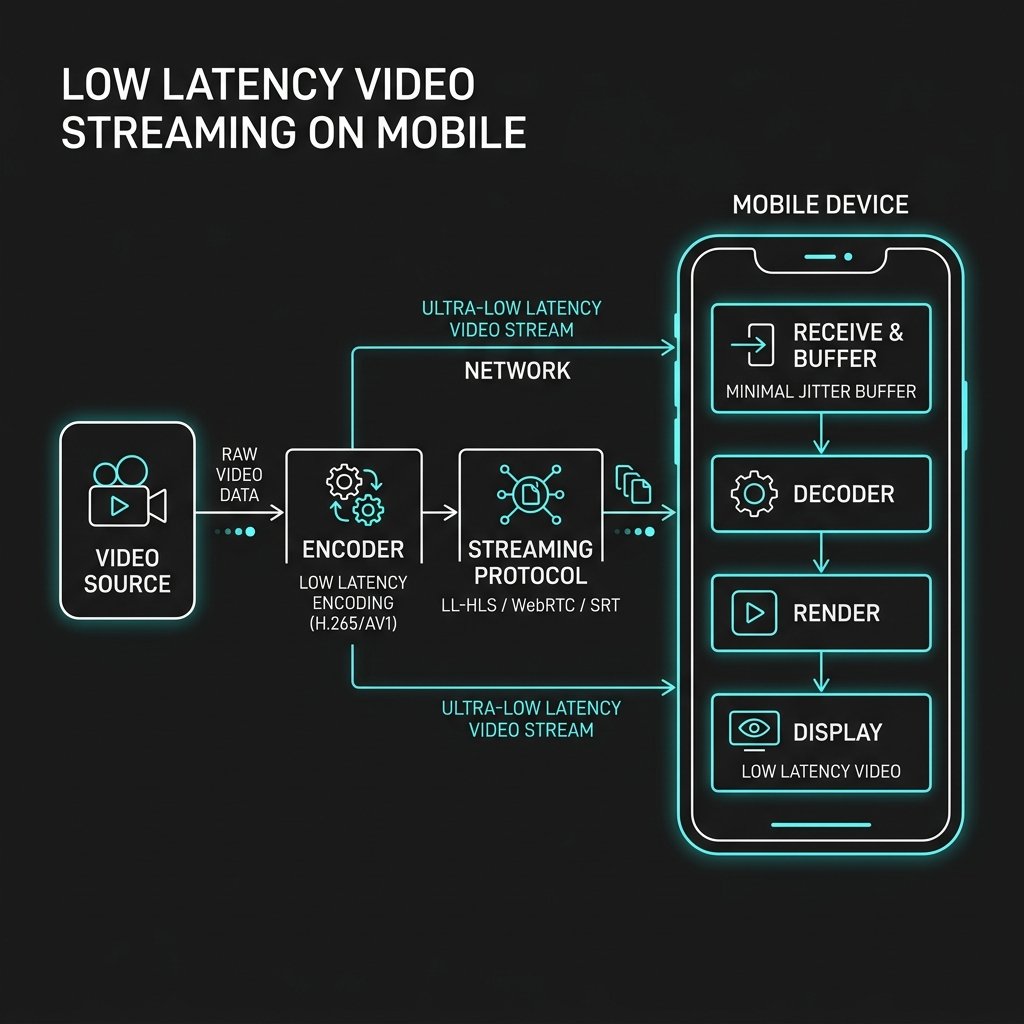
When packet loss spikes to 20% or even 50%, QUIC's intelligent congestion control and independent streams ensure that subsequent frames arrive immediately. Instead of waiting for a lost background detail, the decoder renders the latest crucial frame. By deploying a Tier-1 Rust-based gateway, engineers can guarantee sub-200ms glass-to-glass latency across fluctuating cell towers. Our engine aggressively prioritizes essential telemetry over lower-priority data. The result is absolute resilience: operators maintain real-time visual feedback, drastically reducing risk in hostile zones where every millisecond dictates success.